
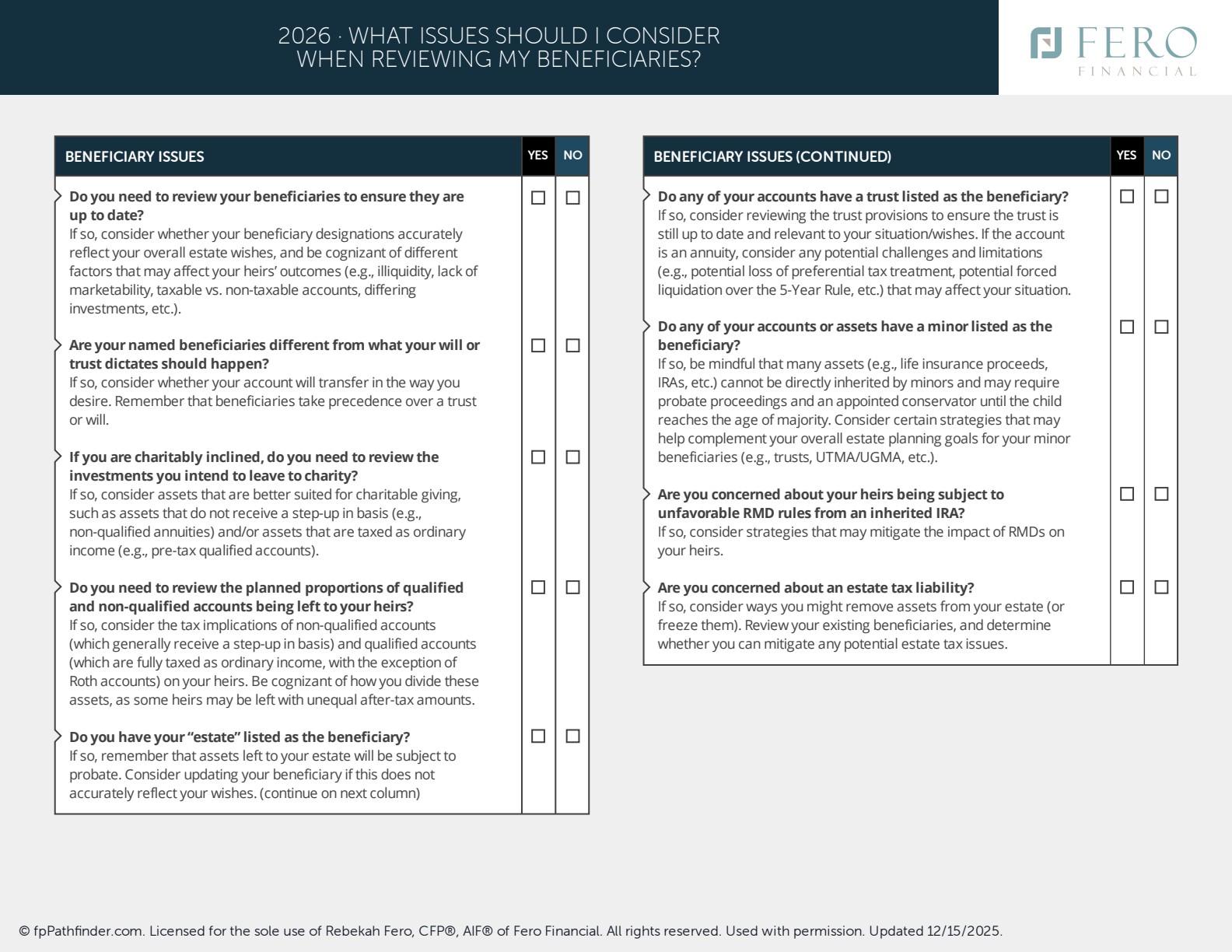

One of the most overlooked aspects of retirement and estate planning is keeping your retirement account beneficiaries up to date. A beneficiary designation often overrides your will, making it essential to review your accounts after major life events such as marriage, divorce, the birth of a child, or the death of a loved one.
Not All Retirement Accounts Follow the Same Rules
While IRAs, Roth IRAs, 401(k)s, and 403(b)s all help you save for retirement, they do not follow the same beneficiary rules.
For example, 401(k) plans generally require your spouse to be the primary beneficiary unless they sign a written waiver. IRA beneficiary rules may vary depending on state law and the account agreement.
Failing to understand these differences can lead to unintended consequences. Imagine naming your children as beneficiaries after a divorce but forgetting to update one retirement account. Years later, after remarrying, your retirement assets could be distributed very differently than you intended.
Why Beneficiary Reviews Matter
Regular beneficiary reviews help ensure your retirement assets pass according to your wishes while providing your loved ones with greater flexibility and potential tax planning opportunities.
Key Takeaways
- Review your beneficiaries after every major life event.
- Remember that beneficiary designations often override your will.
- Understand that IRAs and employer retirement plans have different beneficiary rules.
- Work with your financial, tax, and legal advisors to coordinate your retirement accounts with your overall estate plan.
A simple beneficiary review today can help prevent costly mistakes and provide greater financial security for the people you care about tomorrow.
Reviewing Beneficiaries - What Issues Should I Consider When Reviewing My Beneficiaries